I was at a girls soccer game, there to cheer on my sons’ classmates against one of our biggest rivals, when I ran into Julia Tar walking into the stadium. I knew Julia years ago as a student at Lenawee Christian School, and she was one of the most pleasant, easy to talk to students I can remember. That night her loyalties were split. She’s an alumna of one school, and her dad coaches the other school’s soccer team.
We stood at the fence and caught up for more than an hour. She asked how I liked working at Gray Institute and reminded me that she completed GIFT, our 40-week mentorship fellowship, in 2021. She was 22.
Then she told me what she does now. Julia is a massage therapist, but not the kind you’re picturing. She cares for horses and for the people who ride them. What stopped me was how she described it. Her GIFT training taught her to look for the root cause, and with horses and riders, the root cause often isn’t where people look first.
“I think most people look at the horse, how they’re moving, their mistakes, their injuries, and blame it on the horse, and miss the person who is often the problem as they get in the way of the horse.”
She knew at 8 years old
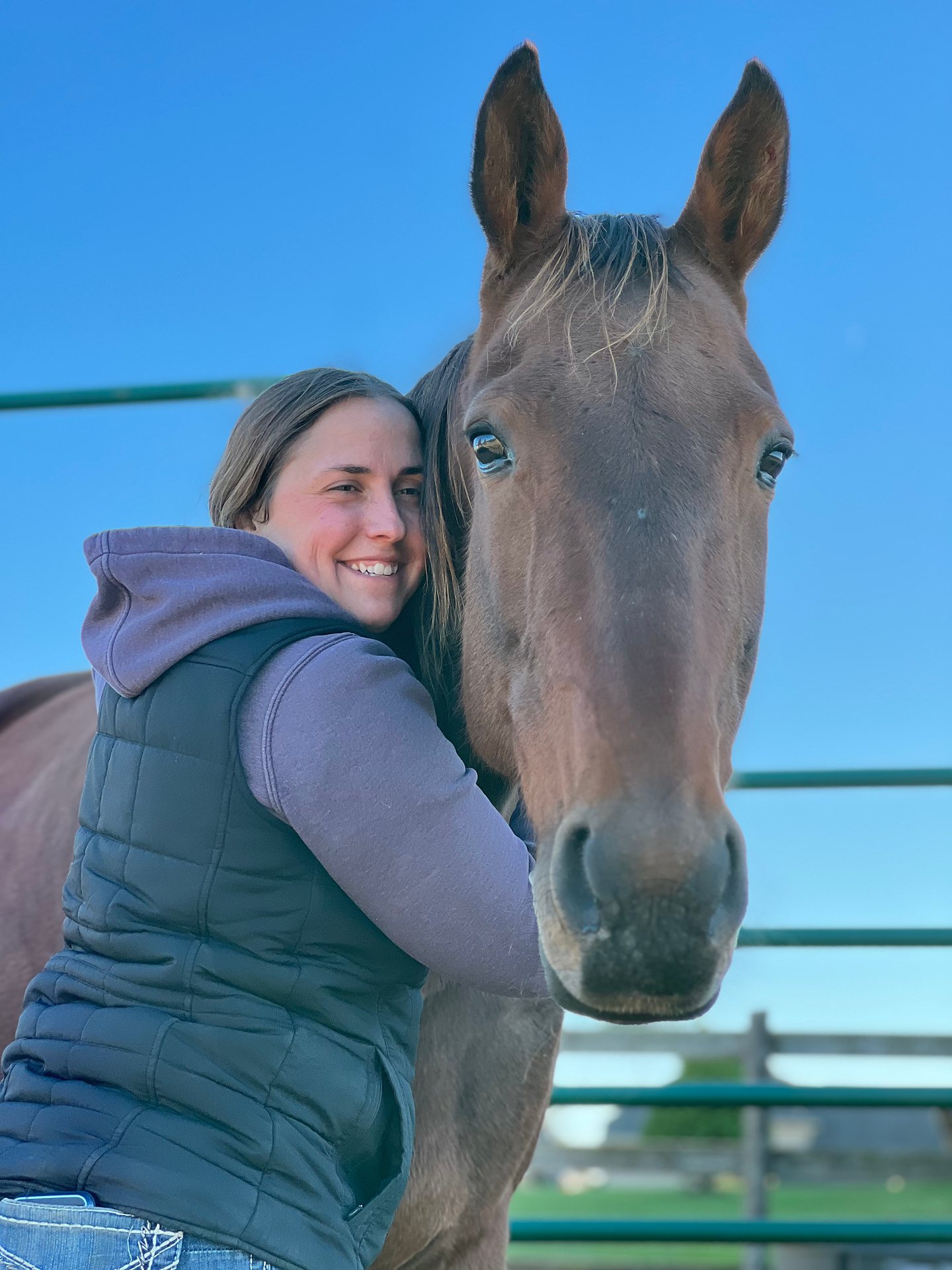
Julia’s family got their first horse when she was about 5, and horses have been part of her life ever since. “They are some of the most beautiful, intelligent, willing, loving creatures on earth,” she says.
Massage came almost as early. At 8, she gave her family five-minute massage certificates for Christmas. By middle school, people had talked her out of it. She was told she couldn’t make a career of it.
Then, as a high school junior, she had ACL surgery and did her rehab at 3-Dimensional Physical Therapy, a clinic owned by two GIFT Fellows and built on Applied Functional Science® (AFS), a way of caring for people that looks at how the whole body moves together. She loved it. She came back as a student her senior year, took a tech position there, and started college on the physical therapy track.
“I loved how much I was exposed to AFS,” she says. “It helped me get through massage school and understand the body functionally.”
After her first year of college, physical therapy didn’t feel quite right, so she took a semester off. One day a coworker mentioned getting a massage. Julia said she’d always been interested in it, and the coworker told her about a local massage school she’d never heard of. Its owner had once worked at the same clinic and was a fellow alumna of her alma mater. Within four months, Julia was enrolled, on scholarship, with a local grant, and with “an amazing mentor” who “basically fell into my lap.”
When she told her sister, her sister said she should get an equine certification too. Julia wanted to finish human massage school first. She graduated just as COVID began.
In 2021, she was in GIFT. About halfway through the year, she felt the urge to look into equine massage. She signed up for an August course in Virginia, so she completed GIFT and her first equine massage program in the same year.
“I think the lack of biomechanics in the equine massage world, and how involved in AFS I was, really sparked my interest in horse movement and how humans impact the ride.”
She admits she felt a little out of place at first. Most of her GIFT classmates were physical therapists, athletic trainers, and personal trainers who used movement every day, while most of her work happened on a table. She’s glad she did it anyway, and glad she did it young. “I understood movement on a much deeper level, and the body as a whole,” she says. “I’ve been able to get greater, longstanding results.”
One Chain Reaction®, two bodies
In Applied Functional Science, a Chain Reaction® describes how the body moves as a connected whole, so a problem in one place shows up somewhere else. What Julia sees every week is that when a horse and rider move together, the chain doesn’t stop at the edge of one body.
It starts with how a rider talks to a horse. Most people think it happens through the reins. Julia says it mostly doesn’t.
“The rider is communicating with the horse through movement in their body. It’s actually really intricate, small movements, typically in the hip, core, and leg area. A really strong rider doesn’t need to use their hands at all.”
Think of two dance partners. The lead doesn’t steer with their hands. They guide with small shifts of the body, and the follower feels every one. When it works, two bodies move as one, and it’s beautiful to watch. When the lead’s hip is stiff, the signal gets muddy, the follower stumbles, and either one can get hurt. And the crowd blames the follower.
So when a rider starts compensating anywhere in their own body, they may not be able to cue the horse properly. And when the horse has an issue in its body, it compensates too, while the rider works hard trying to get the horse to do what they’re asking.
The knee that changed the canter
One of Julia’s riders came to her with a knee injury. To take pressure off the meniscus, the rider made a small change in how they sat in the saddle, shifting their leg. Few people would ever notice it. But it limited the mobility in the rider’s hips.
When the rider asked the horse for a lope, or canter (think running compared to jogging), their hips couldn’t open enough to create a good seat. Instead of moving with a smooth rhythm, the rider’s seat became choppy. The horse felt that unusual movement on its back and slowed down. And without a balanced, stable seat, the rider’s leg cue couldn’t hold the horse in the faster gait, so the horse fell out of it.
“Just the little tweak in the knee works all the way up into the rider and then comes out into the horse.”
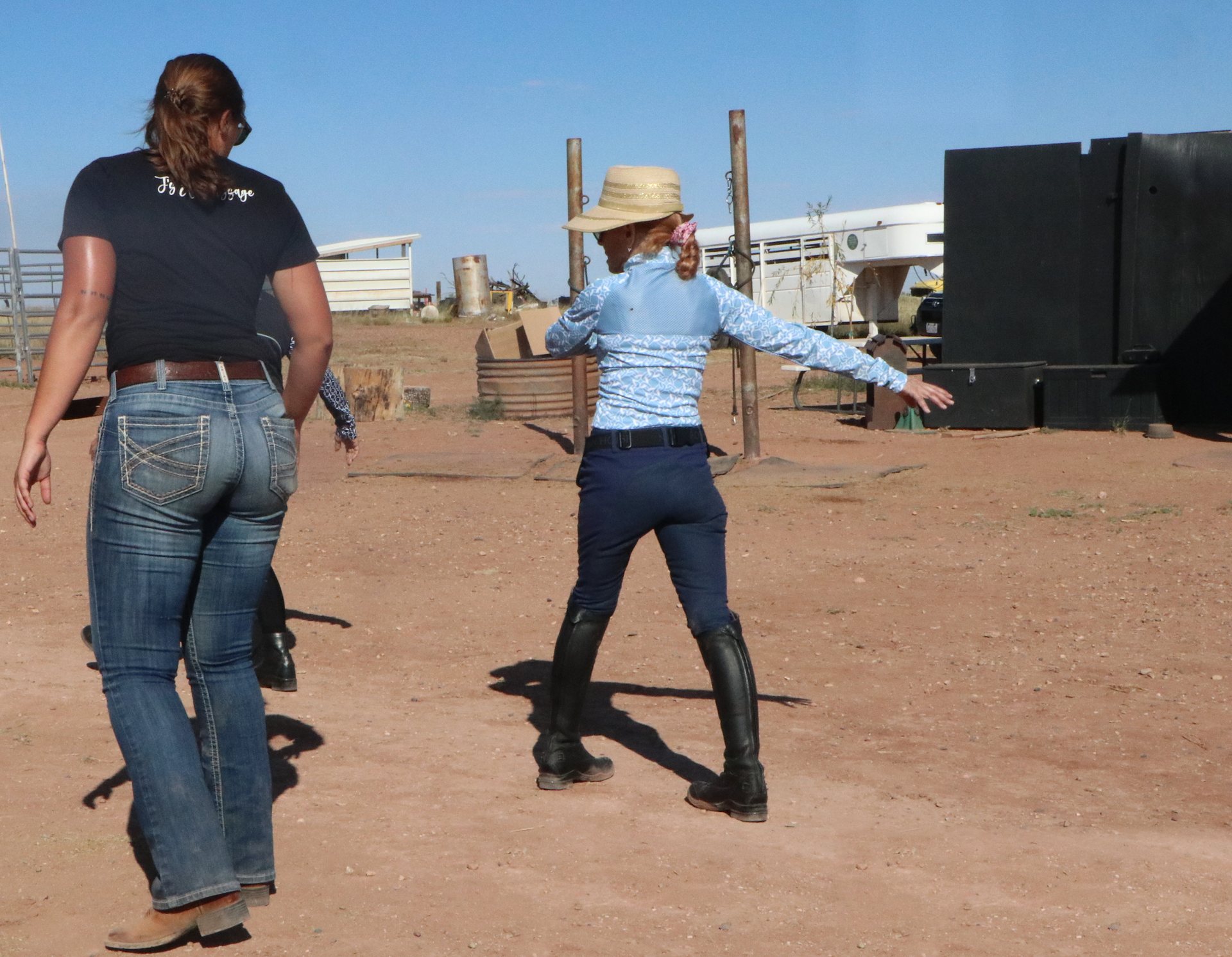
Much of the fix happened out of the saddle, with 3DMAPS® hip mobility work and strengthening. (3DMAPS® is Gray Institute’s movement assessment system.) Julia has taken that same approach on the road, teaching 3DMAPS® to equestrians all over the US.
When “bad behavior” isn’t bad behavior
Julia points out that when a horse is lame or off in its step, people are usually good about giving it rest. What gets missed is the horse that seems to have a behavior problem, or refuses to do what it’s asked under saddle.
“It’s not necessarily bad behavior,” she says. “It actually translates into pain, or the inability for their body to do such action.” The horse may lack the mobility or strength for the task. When riders respond by cueing harder, the extra effort and frustration show up in their own bodies and in how they ride.
Both directions are real, but in her experience one is far more common. “More often than not, I see a rider issue come out into the horse, not as much a horse issue come out into a rider.”
Looking at the partnership, not two patients
When the source of a problem is obvious, Julia goes straight after it. When it isn’t, she assesses how both the horse and the rider move, gets her hands on both for soft tissue work, and takes a thorough history of each one’s health, wellness, and training.
“AFS has really had me look at the entirety of them together and not individually. Being able to look at both sides, and knowing what the rider needs to improve, has helped make better riders, create better horses, and create a better partnership.”
A day’s work: horse and human
Julia runs her own business, J’s EQMassage, and is also the massage therapist at PrimeTime Chiropractic in Adrian, Michigan. She sees people at PrimeTime and in their homes across southeast Michigan, and she recently began offering sessions in a rustic barn setting in Clinton, with her own horses right outside the massage room walls. For horses, she travels to barns and horse shows across the country.
Her sessions center on hands-on soft tissue work, and she adds joint mobilization, stretching, and movement whenever she can. She works with horses and people of all ages and disciplines. “Horses and humans are both athletes, from the start of movement until the end of life,” she says.
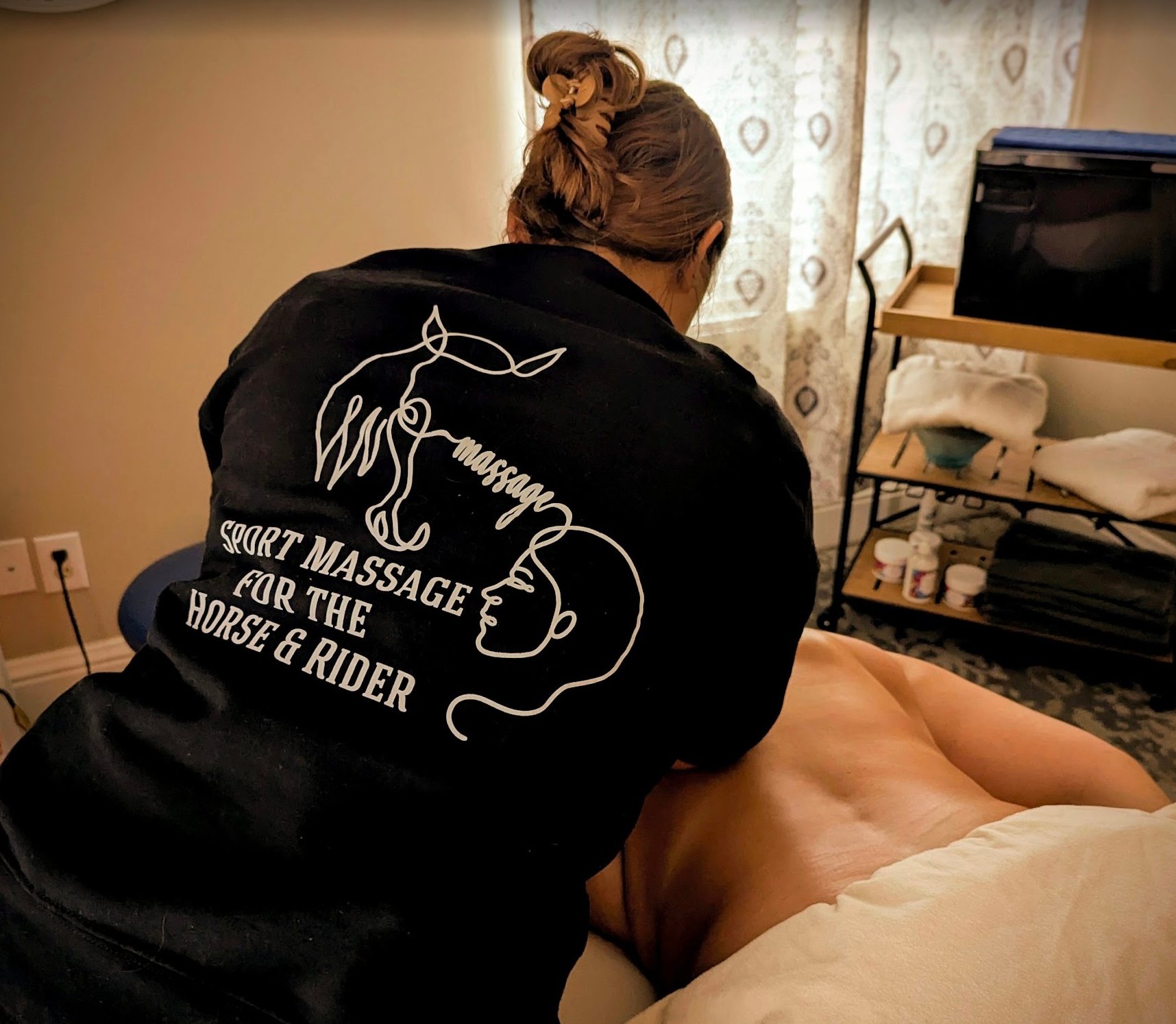
She doesn’t require a horse and its rider to both be seen, but the best results come when they are. If there’s room to set up a table at the barn, or the rider lives on the property, she’ll often work on both the same day. She usually schedules a horse on a rest day or a light day, so its body can adjust to the changes from the session without hard training.
Show season makes the case for caring for both. Traveling to shows means hours of sitting in cars for riders, while horses stand and stabilize in trailers. Once they reach the show grounds, horses stand in small stalls, and riders sleep in campers or other unfamiliar beds. Both halves of the team pick up compensations along the way.
She has also spent a lot of time with Mustangs, wild horses learning to trust people and be ridden. Sometimes in a first session she can’t even work the whole body because the horse is scared and not ready to trust her.
“Seeing them a few sessions later melting into the work, and fully trusting and surrendering to what I’m doing. Seeing them release and feel good in their body. It really touches my heart.”
Why she loves it
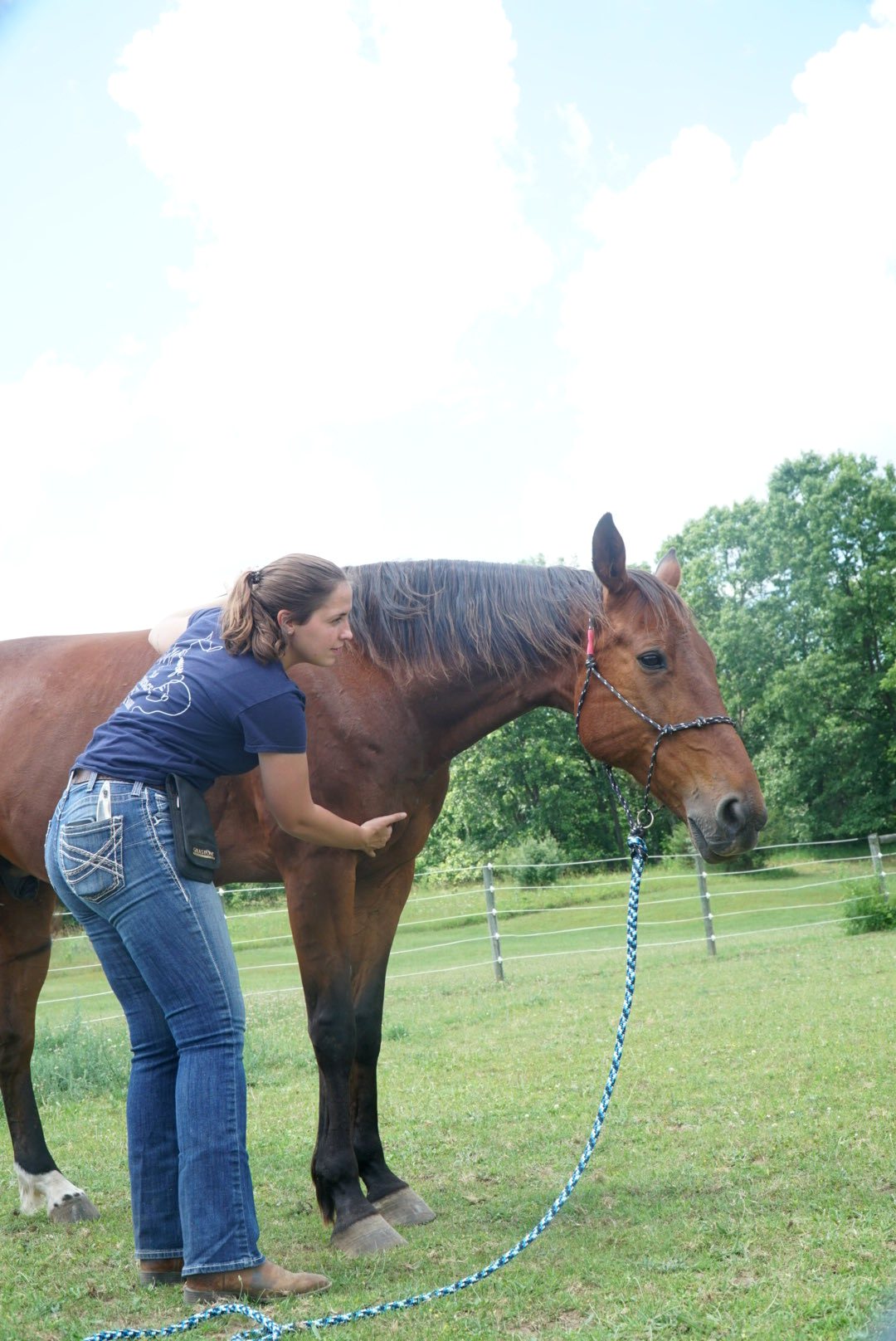
Ask Julia what she enjoys most, and she doesn’t talk about technique. “Watching a horse and rider grow together. Watching the trust and bond strengthen. I just love being able to help both horse and human feel better and do what they love.”
To her, caring for only one of them would feel incomplete. “They are a partnership and a duo. If you focus on one side but not the other, you truly are missing a huge part of the whole.”
The moments that stay with her most involve rescue horses: abused, neglected, broken down.
“It always melts my heart to give them some relief in their body after all they do for us. They are beautiful animals, and we don’t deserve them. They give everything to us.”
A word to others who care for horses and riders
We asked Julia what she’d tell a veterinarian, vet tech, equine or veterinary chiropractor, or massage therapist who works with horses and riders and is wondering whether GIFT is worth it. She didn’t hesitate.
“Do it! If you want to see a true change in your client, understanding the human body, how it moves and functions, is such a key in the horse’s body and movement. If you want to see horses improve, the people need to improve.”
She also sees GIFT filling a gap in her field. “No equine biomechanics course dives deep into functional movement,” she says. “So even if you don’t work much with the human side, you can take the information you learn and apply it to horses.”
And when we asked her to sum up what GIFT has meant to her career, she pointed past herself:
“Life changing, but not just for me. For every single client who has better results because the body, or both bodies, are approached as a whole and not just at the symptom.”
Want to learn more about Julia’s work? Visit JsEQMassage.com or follow J’s EQMassage on Facebook. To see whether GIFT is a fit for you and the people in your care, explore GIFT.
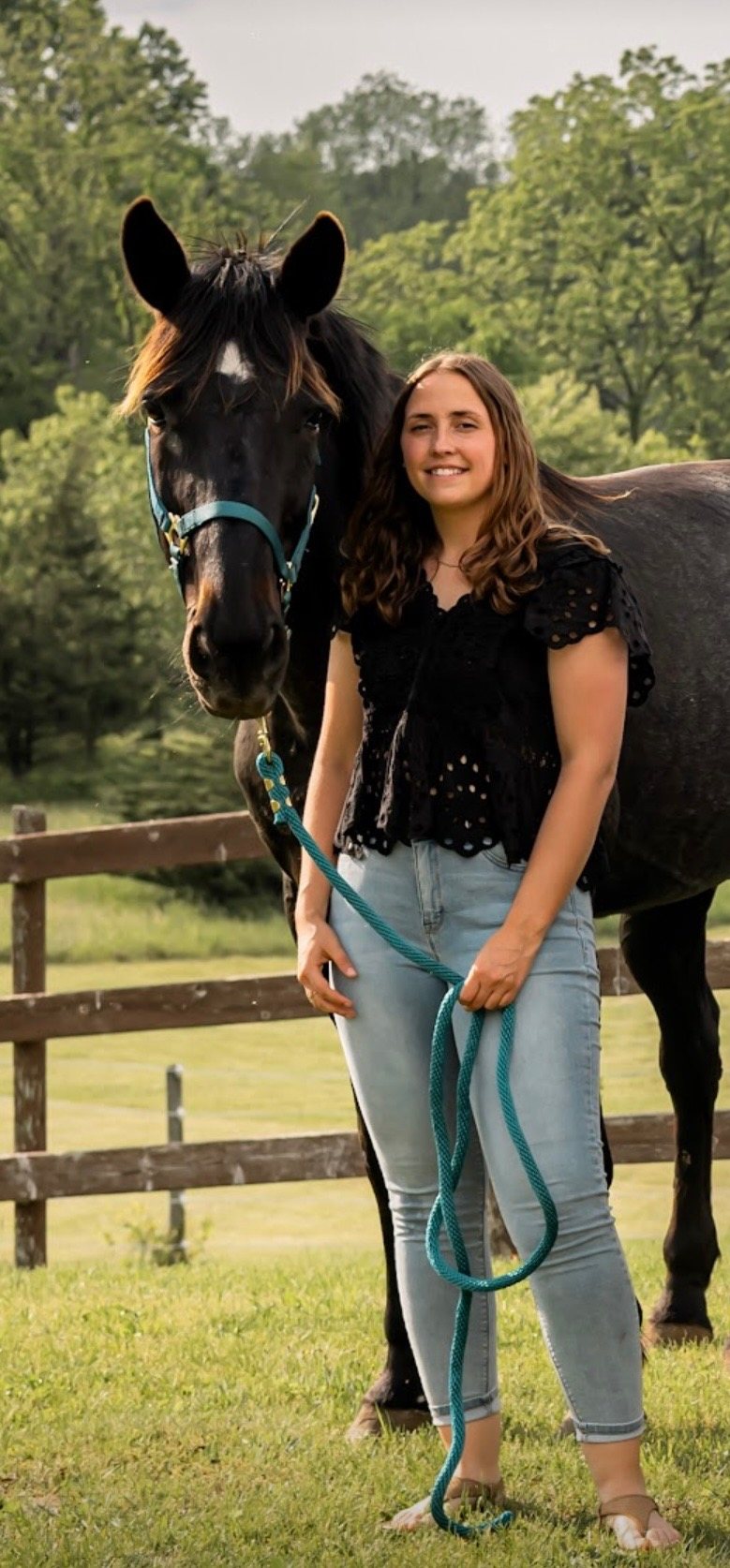
Julia Tar, LMT, BCTMB, ESMT, FAFS
Julia is a licensed massage therapist, Board Certified in Therapeutic Massage and Bodywork, and certified in Equine Sports Massage Therapy. She completed GIFT in 2021.